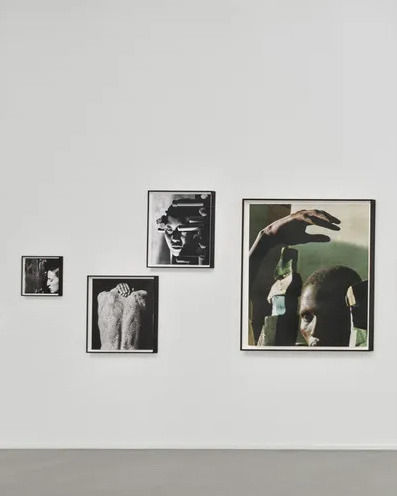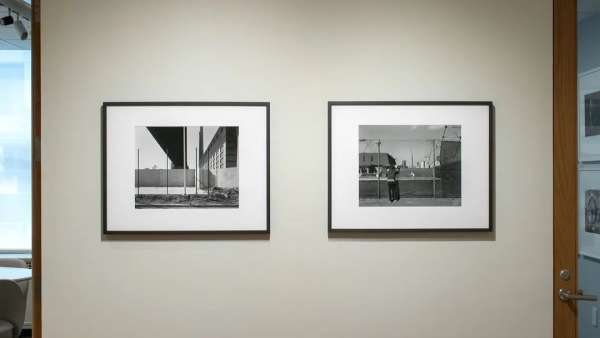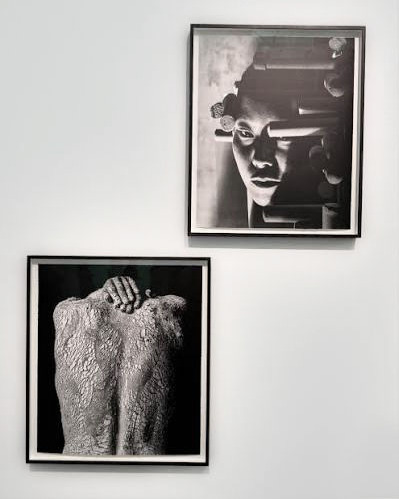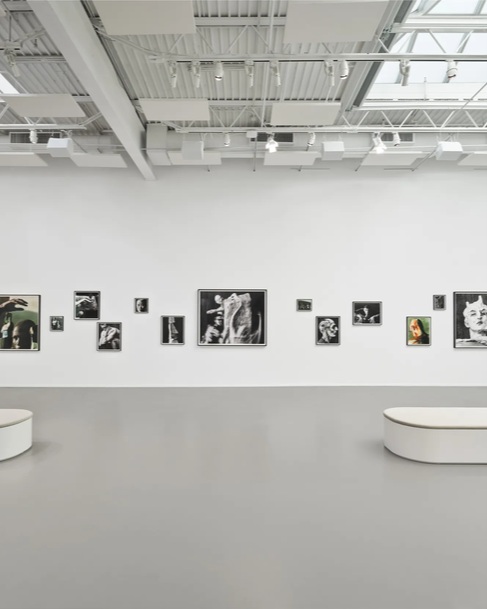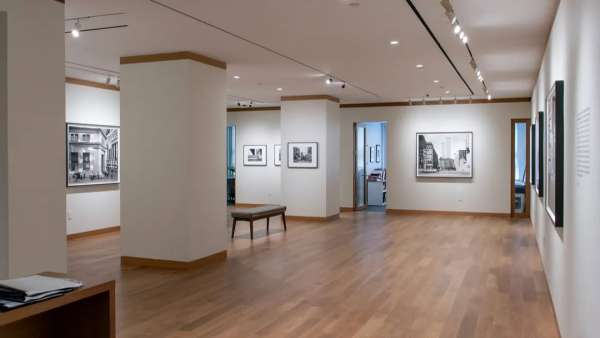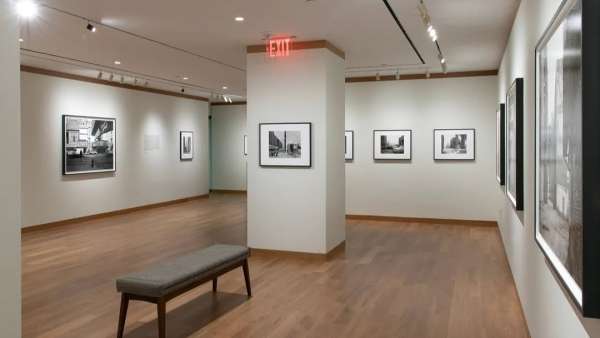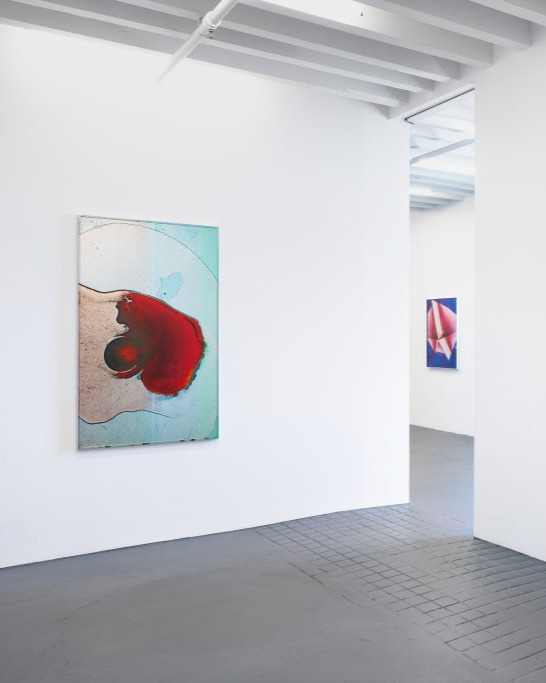
Eileen Quinlan's show "Line Call" now open at Miguel Abreu Gallery till October 31st.

Griffin produced the series of UV printed mirrors that extend out to the frame for Eileen's exhibition.i

Line Call is a show animated by the unruly drama of memory: the photographs included here span twenty years of Eileen Quinlan’s work. Old images are recalled to perform new tasks as they come into company with works being shown for the first time, including snapshot images of friends, family, and intimate spaces. The artist’s archive is open and displayed. A counterpoint to Quinlan’s heavily processed digital works, these ‘private’ images are shown, in a sense, untouched, printed and mounted without alteration. They speak to the burden placed on photography since its onset, its promise to capture and preserve, set within the context of an artist’s practice that has more often emphasized the photograph’s inherent instability and its penchant for change, decay, and evolution. The play of the matter, the show’s animacy or drama, is that one order of image supports the other, each performing subtle tenses of flux among the dual processes of how an image is conjured and what it conjures for perception.

Eileen Quinlan's show "Line Call" now open at Miguel Abreu Gallery till October 31st. Griffin produced the series of UV printed mirrors that extend out to the frame for Eileen's exhibition.i Line Call is a show animated by the unruly drama of memory: the photographs included here span twenty years of Eileen Quinlan’s work. Old images are recalled to perform new tasks as they come into company with works being shown for the first time, including snapshot images of friends, family, and intimate spaces. The artist’s archive is open and displayed. A counterpoint to Quinlan’s heavily processed digital works, these ‘private’ images are shown, in a sense, untouched, printed and mounted without alteration. They speak to the burden placed on photography since its onset, its promise to capture and preserve, set within the context of an artist’s practice that has more often emphasized the photograph’s inherent instability and its penchant for change, decay, and evolution. The play of the matter, the show’s animacy or drama, is that one order of image supports the other, each performing subtle tenses of flux among the dual processes of how an image is conjured and what it conjures for perception. | Griffin Editions

Griffin Editions
More from Griffin Editions
“Rude in the Good Way,” an exhibition of ph...
Jack Davison from "What Holds Us" exhibitio...
Nina Hartmann, ESP Star (Diagram I), 2026. ...
Baldwin Lee's "New York (1975-1979)" at How...
Jack Davison from "What Holds Us" exhibitio...
Libby Rothfeld "The World Is Not Enough" at...
"GHOSTS" by Eliza Douglas at Gagosian Galle...
“Rude in the Good Way,” an exhibition of ph...
Jack Davison from "What Holds Us" exhibitio...
Baldwin Lee's "New York (1975-1979)" at How...
Tishan Hsu "Emergence" at Lisson Gallery, N...